
Dog teeth cleaning typically costs $300 to $1,000, although the total can rise when a dog needs dental X-rays, tooth extractions, or treatment for advanced periodontal disease. The exact dog teeth cleaning cost depends on your dog’s oral health, anesthesia needs, size, age, and the services included in the procedure.
A veterinary team usually cannot provide an exact total without examining your dog. During an initial visit, the veterinarian can evaluate visible plaque, gum inflammation, broken teeth, and other concerns. However, some dental problems remain hidden below the gumline until the team takes dental X-rays while the dog is under anesthesia.
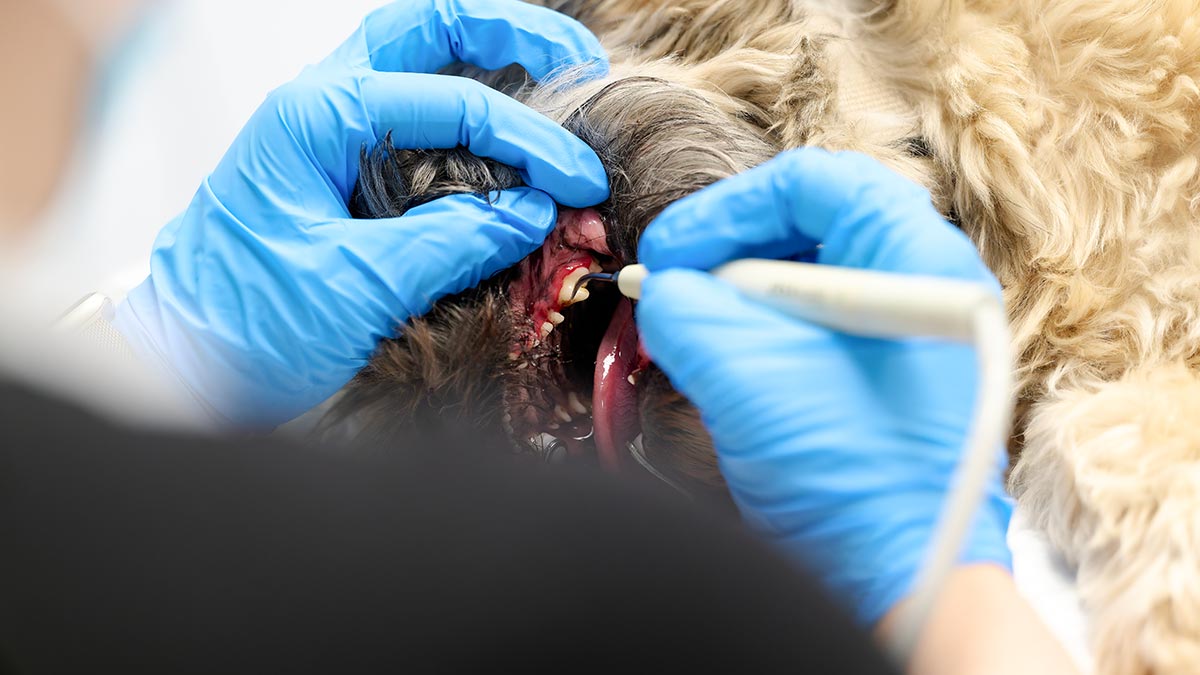
What Factors Affect the Cost of Dog Teeth Cleaning?
The cost of dog teeth cleaning reflects much more than removing visible tartar. A professional dental procedure involves several team members, specialized equipment, anesthesia monitoring, and a tooth-by-tooth examination. Your dog’s individual needs determine which services appear on the estimate and how long the procedure takes.
Common cost factors include:
- A physical examination before the procedure
- Pre-anesthetic laboratory testing
- Anesthesia and continuous patient monitoring
- Dental X-rays
- Scaling above and below the gumline
- Polishing each tooth
- A complete oral examination and dental charting
- Treatment for diseased, loose, or fractured teeth
- The number and complexity of any extractions
- Additional monitoring for senior dogs or dogs with health conditions
A routine cleaning for a dog with mild tartar will generally cost less than treatment for a dog with advanced periodontal disease. Tooth size, root shape, and the location of a damaged tooth can also affect extraction difficulty. Your veterinarian should explain the proposed services, estimated range, and process for approving any additional treatment discovered during the procedure.
Why Can the Final Cost Change After the Procedure Begins?
A veterinarian can see part of your dog’s mouth during an awake examination, but much of each tooth sits below the gumline. Dental X-rays may reveal bone loss, infected roots, retained tooth fragments, or other painful problems that were not visible beforehand. The American Animal Hospital Association recommends dental imaging and a detailed examination during professional dental procedures because surface appearance does not show the full condition of the mouth.
If the veterinarian discovers a damaged or infected tooth, removing it may protect your dog from ongoing discomfort and worsening infection. Extractions add to the total because they require additional anesthesia time, equipment, monitoring, and surgical skill. A dental estimate may therefore include a range rather than one fixed figure.
What Does a Professional Dog Dental Cleaning Include?
A professional cleaning addresses plaque, tartar, and disease both above and below the gums. Cleaning beneath the gumline matters because periodontal disease begins in the tissues that support each tooth. Simply making the visible surfaces look cleaner does not address infection or structural damage below them.
Before the procedure, the veterinary team examines your dog and evaluates whether anesthesia appears appropriate. The veterinarian may recommend laboratory testing to assess organ function and identify concerns that could influence the anesthesia plan. The team then develops a protocol based on your dog’s age, breed, size, medical history, and current health.
During the procedure, the team typically:
- Places a breathing tube to protect the airway
- Monitors heart rate, breathing, oxygen levels, temperature, and blood pressure
- Takes dental X-rays when indicated
- Measures the gum pockets around the teeth
- Removes plaque and tartar above and below the gums
- Polishes the teeth to smooth their surfaces
- Examines the tongue, gums, palate, and remaining oral tissues
- Records findings in a dental chart
- Treats diseased teeth with the owner’s authorization
These steps explain why professional veterinary dentistry costs more than cosmetic tartar removal. The procedure requires trained professionals and careful monitoring from preparation through recovery.
What Is Non-Anesthesia Dog Teeth Cleaning?
Non-anesthesia dog teeth cleaning involves scraping visible tartar from the exposed surfaces while the dog remains awake. Although the teeth may look cleaner afterward, this process cannot provide a complete examination or clean the areas beneath the gums where periodontal disease develops.
The American Veterinary Medical Association, American Animal Hospital Association, and American Veterinary Dental College do not recommend anesthesia-free dental cleanings. Without anesthesia, a provider cannot safely obtain complete dental X-rays, examine every surface, measure gum pockets thoroughly, or clean beneath the gumline. Restraining an awake dog while using sharp dental instruments can also cause stress, movement, or injury.
A lower price does not necessarily make non-anesthesia cleaning a better value. The procedure may leave painful disease undetected while giving the impression that the mouth is healthy. A professional veterinary cleaning focuses on diagnosing and treating oral disease rather than improving appearance alone.
How Long Is a Dog Under Anesthesia for Teeth Cleaning?
The amount of time a dog remains under anesthesia varies. A straightforward cleaning may take less time than a procedure that includes full-mouth X-rays, several extractions, or treatment for advanced disease. The veterinary team aims to complete the necessary work efficiently without rushing the examination or treatment.
Your dog’s anatomy can influence procedure length. Small dogs often have crowded teeth and may develop periodontal disease in hard-to-reach areas. Large teeth with multiple roots may require more time to remove safely. Broken teeth, abnormal roots, and significant bone loss can also make treatment more involved.
The team monitors your dog throughout anesthesia and recovery. Appropriate monitoring allows the staff to respond quickly to changes in heart rate, blood pressure, oxygenation, breathing, or body temperature. Dentistry often requires anesthesia so veterinarians can control pain, protect the airway, and perform the necessary work safely.
Is Anesthesia Safe for Dog Teeth Cleaning?
Every anesthetic procedure carries some degree of risk, but veterinary teams take several steps to reduce it. They evaluate the dog beforehand, customize the anesthesia plan, place an airway tube, and monitor vital signs continuously. Anesthesia risks remain very low for healthy or minimally compromised patients when trained professionals follow appropriate protocols.
Age alone does not automatically prevent a dog from receiving dental care. A veterinarian considers overall health, laboratory findings, medical history, heart and lung function, and the likely effects of untreated dental disease. This individualized assessment helps the veterinarian weigh the benefits and risks for each patient.
Does Dog Insurance Cover Teeth Cleaning?
Many standard accident-and-illness pet insurance policies do not cover routine dental cleanings because insurers classify them as preventive care. Some companies offer optional wellness benefits that reimburse a set amount toward preventive services, which may include a dental cleaning. Coverage, reimbursement limits, waiting periods, and eligibility requirements vary considerably.
Dental illness coverage differs from preventive cleaning coverage. A policy may help with eligible treatment for injuries or dental disease while excluding routine cleanings. Some plans also require owners to maintain regular examinations and recommended preventive dental care before the insurer will cover future dental conditions.
Review your policy before scheduling the procedure. Ask whether it covers anesthesia, dental X-rays, extractions, periodontal treatment, and preventive cleanings. You should also confirm the deductible, reimbursement percentage, annual limit, and documentation requirements directly with your insurance provider.
Is Dog Teeth Cleaning Necessary?
Professional dental cleaning becomes necessary when plaque, hardened tartar, gingivitis, periodontal pockets, infection, or damaged teeth affect the mouth. Dogs often continue eating even when dental disease causes discomfort, so normal appetite does not guarantee healthy teeth.
Schedule an examination if you notice:
- Persistent bad breath
- Red, swollen, or bleeding gums
- Heavy yellow or brown tartar
- Loose, chipped, or discolored teeth
- Dropping food while eating
- Chewing on one side of the mouth
- Pawing at the face
- Facial swelling
- Increased drooling
- Reluctance to eat hard food
Without treatment, periodontal disease can damage the gums, tooth-supporting bone, and tooth roots. Earlier evaluation may allow the veterinarian to address disease before it requires more extensive treatment. Professional cleanings also give the veterinarian an opportunity to find fractures, masses, infection, and other abnormalities that owners may not notice at home.
How Often Should Dogs Have Their Teeth Cleaned?
Dogs do not all follow the same dental schedule. Some need professional cleanings more frequently because of their breed, jaw shape, tooth alignment, age, oral health, or tendency to accumulate plaque. Small dogs and dogs with crowded teeth often develop dental disease earlier than dogs with more space between their teeth.
Your veterinarian can check your dog’s mouth during routine wellness examinations and recommend the right timing. Waiting for severe odor, loose teeth, or trouble eating may allow disease to progress below the gumline. Regular evaluations help your veterinary team track changes and discuss anticipated costs before your dog develops advanced oral disease.
Request a Dental Evaluation at Mills Animal Hospital
The most reliable way to determine your dog teeth cleaning cost is to schedule an oral health evaluation. The veterinarians at Mills Animal Hospital in Acworth, Georgia, can examine your dog’s mouth, discuss the recommended procedure, and provide an estimate based on their individual needs.
Call (770) 903-5995 or book an appointment online to discuss your dog’s dental health and plan their professional cleaning.