
Row wavy Shape Decorative svg added to bottom

Protecting Your Pet’s Smile with Cat and Dog Teeth Cleaning in Acworth, GA

Why Is Professional Dental Cleaning Important for Dogs and Cats?

Keeping your pet's mouth clean and healthy is just as important as bringing them in for biannual exams and vaccinations. Pets can get plaque and tartar on their teeth, which can lead to sore, swollen gums (gingivitis) and dental disease. At Mills Animal Hospital in Acworth, we recommend and offer professional cat and dog teeth cleaning to prevent dental disease before it can start. Our experienced veterinarians can also perform specialized oral surgery if your pet requires it. Plus, we're all about making visits as stress-free as possible with our low-stress care approach, especially when it comes to dental care.

Ready to book a dental check-up? Give us a call at (770) 903-5995 or schedule your appointment online today!
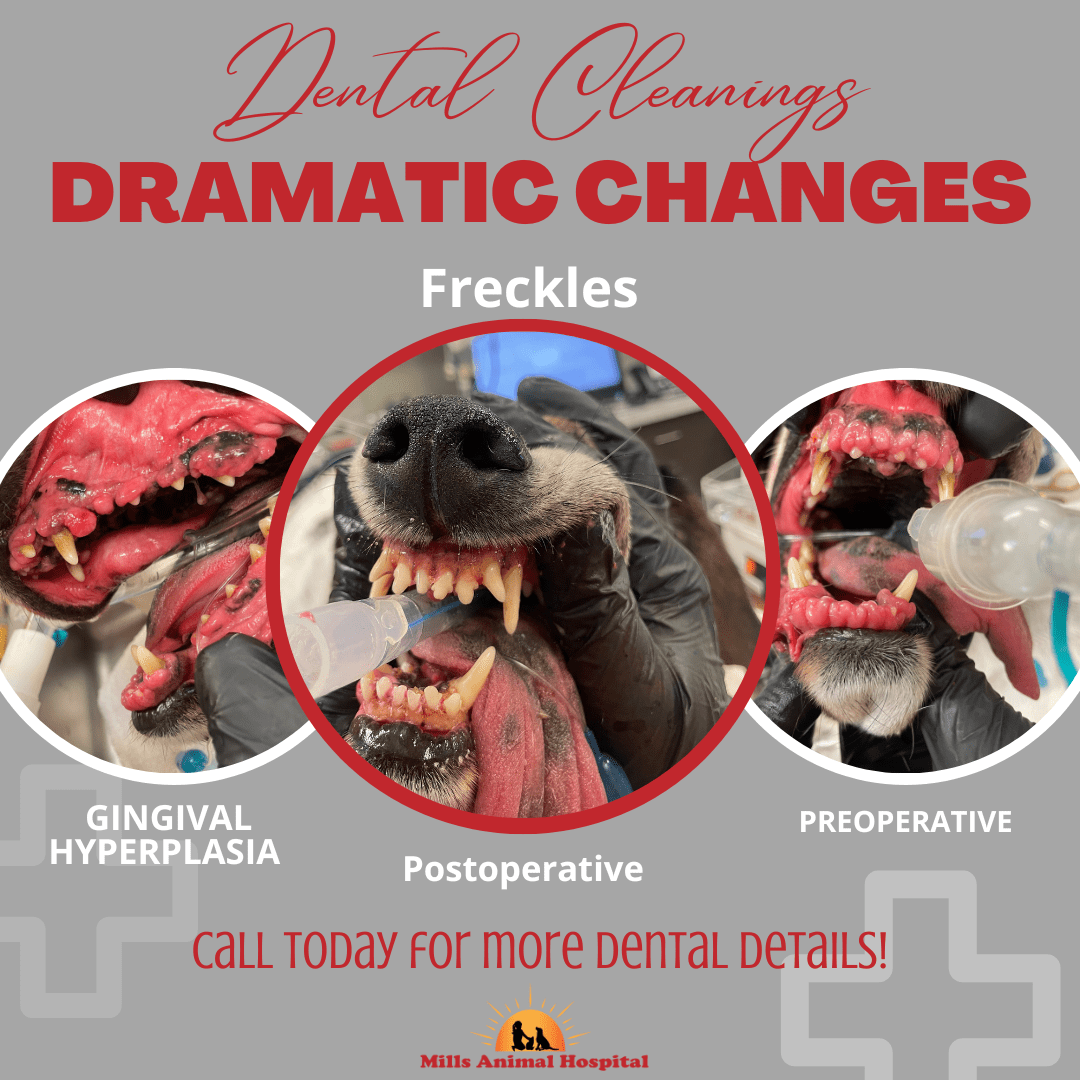
Dental Month Freckles Before And After
Row wavy Shape Decorative svg added to top
Row wavy Shape Decorative svg added to bottom

What Happens During a Professional Cat or Dog Teeth Cleaning?

A professional veterinary dental cleaning involves much more than removing visible tartar. Your pet’s dental procedure includes an oral examination, cleaning above and below the gumline, dental X-rays, continuous monitoring, and treatment of any dental disease we discover.

Here is what you can expect at Mills Animal Hospital:

Pre-Anesthetic Exam and Bloodwork

Before your pet undergoes anesthesia, we perform a physical examination and bloodwork to evaluate their health and identify factors that could affect their procedure.

We may also schedule a pre-dental appointment for necessary lab testing and provide medications to help manage pain, anxiety, or nausea before your pet arrives for their dental procedure.

Anesthesia and Continuous Patient Monitoring

Anesthesia allows us to safely examine and clean every area of your pet’s mouth, including below the gumline.

Your pet receives an IV catheter and fluids to provide cardiovascular support before, during, and after the procedure. Our team continuously monitors important parameters such as heart rate, respiratory rate, blood pressure, carbon dioxide levels, oxygen saturation, and body temperature.

Body Temperature and Patient Support

Body temperature can decrease while a pet is under anesthesia. We use warming equipment, including a warm-air blanket, to help maintain your pet’s temperature throughout the procedure.

Our team also provides individualized support based on your pet’s needs while closely monitoring their condition.

Complete Oral Exam and Dental X-Rays

Once your pet is safely under anesthesia, we perform a complete examination of the teeth, gums, and surrounding oral tissues.

Digital dental X-rays allow us to see beneath the gumline and evaluate areas that cannot be assessed by looking at the visible portion of a tooth alone. These images can reveal concerns such as bone loss, abscesses, root abnormalities, and damage to the structures supporting the teeth.

Professional Teeth Cleaning and Polishing

We use professional scaling instruments to remove plaque and tartar from the teeth, including buildup beneath the gumline.

After scaling, we polish the teeth to smooth the enamel surface. Polishing helps remove small abrasions created during cleaning and creates a smoother surface that makes it more difficult for plaque to adhere immediately afterward.

Local Nerve Blocks for Pain Management

If your pet needs an extraction or another potentially painful dental treatment, we can use local nerve blocks to numb the affected area.

Local anesthesia provides targeted pain control during the procedure and can help keep your pet more comfortable during the early stages of recovery.

Tooth Extractions and Oral Surgery

Sometimes a tooth is too damaged or diseased to remain comfortably in the mouth. When necessary, our veterinarians can perform tooth extractions and other oral surgical procedures while your pet remains safely under anesthesia.

We provide appropriate pain management and may recommend additional postoperative support based on the procedure your pet receives.

Post-Anesthesia Monitoring and Recovery

Our care continues after your pet’s dental procedure is finished.

A trained veterinary technician stays with your pet during recovery to monitor their condition and provide comfort as they wake from anesthesia. We continue observing them until they are alert and ready to return home.

Before discharge, we will explain any findings from your pet’s dental procedure and provide instructions for medications, feeding, activity, or follow-up care when applicable.

How Can I Keep My Dog or Cat’s Teeth Clean at Home?

Regular home dental care can help slow plaque buildup between professional cleanings. Brushing your pet’s teeth is one of the most effective ways to support their oral health at home, and using products approved by the Veterinary Oral Health Council (VOHC) can help as well.

If your dog or cat is new to toothbrushing, introduce the process gradually. Start by getting them comfortable with having their lips, teeth, and gums handled before introducing a toothbrush.

A few tips can make the transition easier:

  • Gently touch your pet’s teeth and gums with your finger and reward calm behavior.
  • Introduce a finger brush or pet toothbrush gradually so your pet can become familiar with it.
  • Allow your pet to taste pet-safe toothpaste before you begin brushing.
  • Brush gently along the gumline using small circular motions.
  • Keep sessions brief and use positive reinforcement to make brushing a more comfortable experience.

Depending on your pet’s oral health and tolerance for brushing, your veterinarian may also recommend dental chews, dental diets, oral rinses, wipes, or water additives.

Home care does not replace professional dental evaluations. During your pet’s routine wellness visits, we can examine their teeth and gums and let you know when a professional cleaning may be recommended.

Have questions about your pet’s teeth or bad breath? Call Mills Animal Hospital at (770) 903-5995 or schedule an appointment to have their mouth evaluated.

Smiling Dog At Home

Frequently Asked Questions About Cat & Dog Teeth Cleaning

How Often Should I Get My Dog or Cat's Teeth Cleaned?

Most cats and dogs should have their teeth and gums evaluated during routine wellness exams. How often they need a professional dental cleaning depends on factors such as age, breed, overall oral health, and the amount of plaque and tartar present. Some pets may benefit from yearly cleanings, while others may need them more or less frequently. At Mills Animal Hospital, we check your pet’s oral health during regular visits and recommend dental care when needed.

Is Pet Teeth Cleaning Without Anesthesia Possible?

Anesthesia-free teeth cleaning may remove some tartar from the visible surface of your pet’s teeth, but it does not allow for a thorough examination or cleaning beneath the gumline, where dental problems can develop. Using anesthesia allows the veterinary team to safely and thoroughly clean the teeth, examine the entire mouth, and identify dental concerns that may be difficult to detect while a pet is awake.

Is Dental Cleaning for a Dog or Cat Worth It?

Yes. Dogs and cats are susceptible to plaque buildup, tartar, gingivitis, and periodontal disease. Without proper dental care, these problems can lead to bad breath, inflamed gums, infection, loose teeth, and oral pain. Professional dental cleanings remove buildup that at-home brushing may not reach and allow the veterinary team to identify and address dental concerns before they become more advanced.

Does Pet Insurance Cover Cat & Dog Teeth Cleaning?

Coverage depends on your specific pet insurance policy. Some preventive care or wellness plans may provide benefits for routine dental cleanings, while standard accident-and-illness policies may only cover dental procedures associated with certain injuries or diseases. Because coverage varies between providers and plans, it is best to confirm your pet’s dental benefits with your insurance company before scheduling a procedure.