
What are the stages of tooth decay in dogs? Veterinarians classify periodontal disease in four stages: gingivitis, early periodontitis, moderate periodontitis, and advanced periodontitis. Each stage reflects increasing inflammation and damage to the gums, ligaments, and bone that support the teeth.
Pet owners often use “dog tooth decay” to describe brown buildup, bad breath, loose teeth, or painful gums. True cavities occur less often in dogs than in people, but periodontal disease can cause progressive damage below the gumline. Because much of that damage stays hidden, a dog may continue eating normally even while disease advances. Learning the dog tooth decay stages can help you recognize changes before discomfort and tooth loss become more likely.
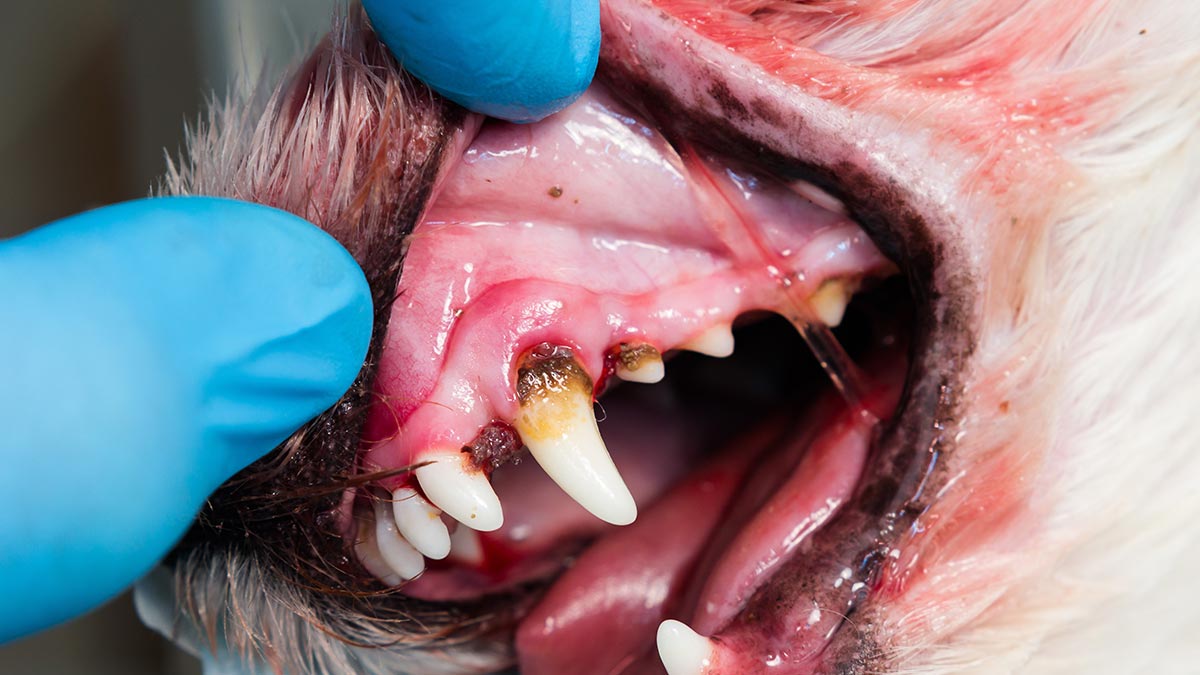
What Causes Dog Tooth Decay and Periodontal Disease?
Dog tooth decay usually begins when plaque forms on the teeth. Plaque contains bacteria and can harden into calculus, or tartar. Bacteria and inflammation can then move beneath the gumline and damage the tissues that hold each tooth in place. Breed, age, tooth alignment, and oral anatomy can influence how quickly the disease progresses.
Small dogs and dogs with crowded teeth often develop problems earlier because plaque collects easily in tight spaces. Retained baby teeth, fractured teeth, and abnormal bites may also create problem areas. Visible tartar does not always show the full extent of disease, since a tooth can look acceptable above the gumline while losing support underneath it. A veterinary dental assessment provides a clearer view of the entire mouth.
What Are the Four Dog Tooth Decay Stages?
Veterinary teams stage periodontal disease according to inflammation and the percentage of attachment loss around affected teeth. Attachment loss means damage to the ligament and bone that secure the tooth. An awake oral exam can identify obvious concerns, but accurate staging requires periodontal probing and dental X-rays while the dog is anesthetized. One dog may have several stages present in different areas.
Stage 1: Gingivitis
Stage 1 involves gingivitis without loss of tooth support. The gums may appear red, swollen, or more likely to bleed, and bad breath may become noticeable. Plaque and tartar may collect along the gumline, but the ligament and bone remain intact. Gingivitis can improve when a veterinarian removes buildup above and below the gumline and establishes an appropriate preventive plan.
Stage 2: Early Periodontitis
Stage 2 means early periodontal disease with less than 25% attachment loss. Bacteria have moved below the gumline, and shallow pockets may form around one or more teeth. The gums may recede slightly, and dental X-rays can show early bone changes around the roots. A dog may have worsening breath, mild sensitivity, or no noticeable behavior changes.
Stage 3: Moderate Periodontitis
Stage 3 involves 25% to 50% attachment loss. Periodontal pockets deepen, gums may recede, and supporting bone becomes noticeably reduced. Teeth can begin to loosen, and infection may develop around or between the roots. Dogs may chew on one side, drop food, avoid hard items, drool, or resist facial touch.
Stage 4: Advanced Periodontitis
Stage 4 represents advanced periodontal disease with more than 50% attachment loss. Teeth may become very loose because much of their supporting bone and ligament has been destroyed. Severe gum recession, deep pockets, exposed roots, infection, and missing teeth may occur. Advanced disease can also contribute to jawbone weakness or openings between the mouth and nasal cavity.
What Signs Suggest Your Dog Has Dental Disease?
The signs of dog tooth decay can range from subtle breath changes to obvious oral pain. Some dogs hide discomfort or adjust how they eat rather than refusing food. Check your dog’s mouth when it is safe, but never force the jaw open or touch a painful area. Schedule an exam when you notice a concerning change.
Common warning signs include:
- Persistent bad breath
- Red, swollen, or bleeding gums
- Yellow or brown tartar
- Loose, broken, or missing teeth
- Drooling or blood-tinged saliva
- Chewing on one side
- Dropping food
- Pawing at the mouth
- Facial swelling
- Sensitivity around the muzzle
Facial swelling, uncontrolled oral bleeding, major trauma, or an inability to eat or drink calls for prompt veterinary attention. A broken tooth can expose sensitive tissue even when the crack looks small. Mills Animal Hospital can evaluate the mouth and determine whether your dog needs dental imaging, cleaning, oral surgery, or other care.
How Do Veterinarians Diagnose Dog Tooth Decay Stages?
A dental evaluation starts with a physical exam and an awake look at the teeth, gums, bite, and facial structures. This helps identify tartar, gingivitis, fractured teeth, masses, and other visible concerns. However, a complete diagnosis requires examination beneath the gumline, where much of the damage occurs. Dental X-rays reveal roots and surrounding bone that cannot be assessed by sight alone.
During a professional dental procedure, the team measures pockets, records attachment loss, cleans and polishes the teeth, and evaluates the X-rays. These findings guide treatment for each tooth rather than the mouth as a whole. Pre-anesthetic testing and continuous monitoring help tailor the procedure to the patient. The Mills Animal Hospital team provides teeth cleaning and oral surgery when needed.
How Do Veterinarians Treat Dog Periodontal Disease?
Treatment changes with the stage and condition of each tooth. Stage 1 generally calls for a professional cleaning and a veterinarian-guided preventive routine. Stages 2 and 3 may require treatment beneath the gumline, closer monitoring, extraction, or advanced periodontal care. Stage 4 commonly requires removal of teeth that have lost substantial support or developed painful complications.
Veterinary treatment may include:
- A complete oral exam
- Full-mouth dental X-rays
- Scaling above and below the gumline
- Polishing
- Periodontal probing and charting
- Treatment or removal of diseased teeth
- A personalized follow-up schedule
Preventive recommendations should reflect your dog’s mouth and risk factors. Products accepted by the Veterinary Oral Health Council can help identify options supported by evidence for plaque or tartar control. Professional cleanings remain necessary when disease exists beneath the gumline, since surface care cannot correct hidden attachment and bone loss.
When Should You Schedule a Dental Exam at Mills Animal Hospital?
Schedule a dental exam when your dog develops bad breath, red gums, visible tartar, chewing changes, or facial sensitivity. Routine wellness visits also let the veterinary team identify early dental changes before they become painful. Dogs with prior periodontal disease, crowded teeth, or rapid tartar buildup may need more frequent assessments. The right timing depends on oral findings rather than age alone.
Mills Animal Hospital in Acworth, GA, offers dental evaluations, teeth cleaning, dental X-rays, and oral surgery based on each patient’s needs. Early action can limit progression, preserve healthy teeth, and improve comfort. Call (770) 903-5995 or book an appointment online to discuss your dog’s dental health and the next appropriate step.