
If your dog has a chipped tooth, contact your veterinarian promptly and stop access to hard chews or toys until the tooth can be examined. Even when your dog continues eating and seems comfortable, the fracture may expose sensitive tissue and allow pain or infection to develop. Dogs often hide oral discomfort, so a normal appetite does not confirm that the tooth is healthy. A veterinarian can assess the fracture, surrounding tissues, and treatment needs.
Mills Animal Hospital in Acworth, GA, evaluates chipped, cracked, painful, and discolored teeth. The sooner the veterinary team examines a damaged tooth, the sooner they can determine whether it requires monitoring or dental treatment.
My Dog Chipped a Tooth but Isn’t in Pain: Is This Serious?
Yes, a dog chipped tooth can still be serious when the dog shows no obvious pain. Dogs may keep chewing, playing, and acting normally despite significant dental discomfort. Some fractures affect only the outer enamel, while deeper fractures expose dentin or the pulp chamber, which contains nerves and blood vessels. Waiting for symptoms may allow a manageable dental injury to become more painful or infected.
A veterinarian should examine every visibly chipped or broken permanent tooth. Urgency depends on the fracture depth, the tooth involved, pulp exposure, and signs of infection. Large chewing teeth and canine teeth can sustain extensive damage even when only a small piece appears missing. An examination helps separate a minor enamel defect from a fracture that threatens the health of the entire tooth.
How Can I Tell How Deep the Chip Is?
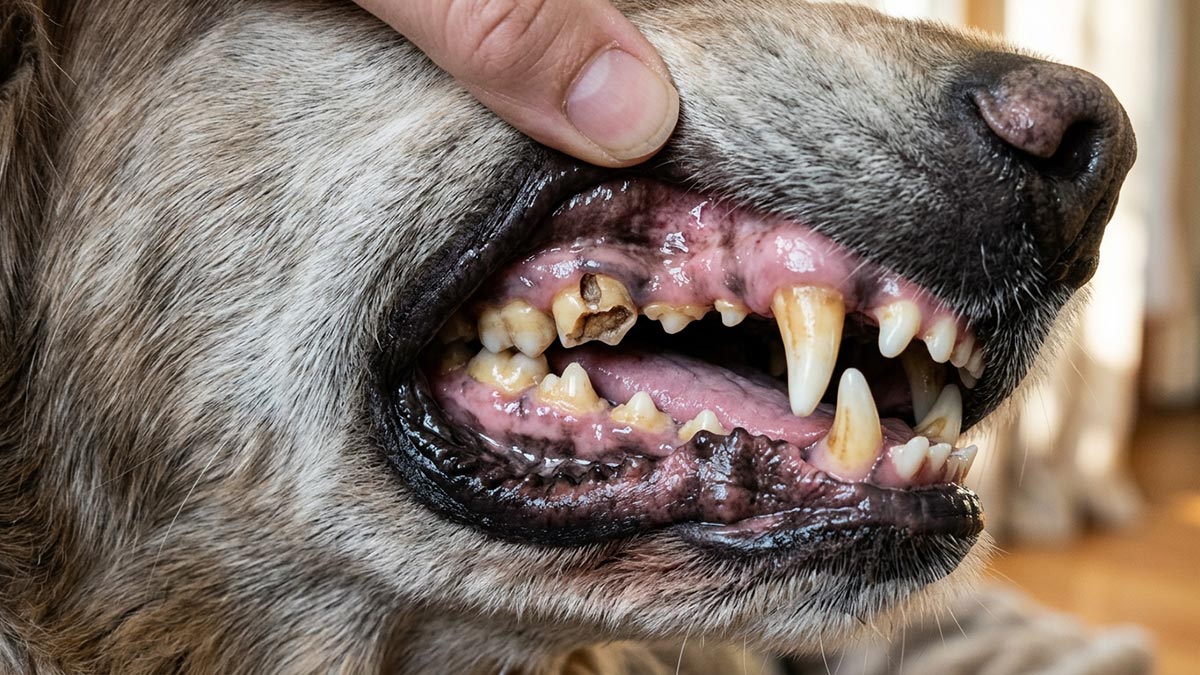
You may see a rough edge, a flattened tooth tip, or a missing section of the crown. A shallow enamel chip may look white throughout, while exposed dentin often appears cream, tan, or yellow. A pink, red, brown, or dark spot in the center may indicate pulp exposure or damage inside the tooth. Appearance alone cannot confirm severity because fractures can extend beneath the visible surface.
Your veterinarian may recommend dental X-rays to assess the root, pulp canal, surrounding bone, and hidden damage. These images can also reveal whether infection has formed near the root tip. Signs that may accompany a fractured tooth include:
- Chewing on one side of the mouth
- Dropping food or avoiding hard treats
- Pawing at the face or rubbing the muzzle
- Excessive drooling
- Sensitivity when the mouth or head is touched
- A gray, purple, brown, or black tooth
- Swelling beneath the eye or along the jaw
- New or worsening bad breath
My Dog Chipped a Tooth and It’s Bleeding: Should I See the Vet?
A chipped tooth that is bleeding needs prompt veterinary attention. Blood may come from the gum, injured soft tissue, or the tooth’s pulp chamber. If the center of the fracture looks pink or red, the injury may have exposed living pulp tissue and created a direct pathway for bacteria. Contact Mills Animal Hospital and describe the amount of bleeding, the damaged tooth, and how the injury occurred.
Keep your dog calm and avoid repeatedly touching or inspecting the area. An uncomfortable dog may pull away or bite even if they normally tolerate handling. Do not allow chewing on bones, hard treats, rigid toys, or other firm objects before the examination. If the injury resulted from a fall, collision, or blow to the face, watch for signs of additional trauma.
When Should I Take My Dog to the Emergency Vet?
Many chipped teeth require a prompt veterinary appointment rather than an immediate emergency visit. However, seek urgent or emergency care when the injury affects breathing, swallowing, jaw movement, or your dog’s overall stability. A broken tooth may occur alongside jaw fractures or head injuries after significant trauma. Severe pain, uncontrolled bleeding, or rapid facial swelling also requires immediate attention.
Emergency warning signs include:
- Heavy or persistent bleeding
- Difficulty breathing or swallowing
- A visibly misaligned or unstable jaw
- Severe or rapidly increasing facial swelling
- Collapse, weakness, or disorientation
- An inability to open or close the mouth
- Significant trauma to the head or face
- Refusal or inability to drink
Without these signs, call your veterinarian and describe the injury, bleeding, swelling, and behavior changes. The veterinary team can advise you about the appropriate examination timing.
What Does a Dog Tooth Look Like When It Falls Out?
A whole dog tooth usually has a visible crown and one or more roots, although the shape varies by tooth type. If you find only a small white fragment, your dog may have broken part of the crown while the root remains inside the jaw. A missing tooth can leave an empty socket, bleeding gum tissue, or a gap where the crown previously sat. Dental X-rays may be needed to confirm whether any root fragments remain.
Puppies normally lose their deciduous teeth as permanent teeth erupt, typically during the first several months of life. Owners may never find these small teeth because puppies sometimes swallow them. However, an adult dog should not lose a permanent tooth without an underlying cause such as trauma, advanced periodontal disease, or damage to the supporting structures. Bring any tooth fragment you find to the appointment, but do not try to place it into the socket.
Why Did My Dog Chip a Tooth?
A dog may chip a tooth while chewing an object that is harder than the tooth can tolerate. Large premolars and molars often fracture when dogs bite down forcefully, while canine teeth may break during impact, pulling, or rough play. Teeth weakened by previous trauma, wear, or dental disease may fracture more easily. In some cases, owners never see the incident and discover the damage during a routine mouth check.
Common causes include:
- Chewing bones, antlers, hooves, or rigid nylon items
- Biting rocks, crate bars, fencing, or household objects
- Catching or chewing very hard toys
- Falls, vehicle accidents, or blows to the face
- Rough play or conflicts with other animals
- Repetitive chewing related to stress or confinement
- Dental disease that weakens the tooth or supporting tissues
Choose chew items with some flexibility that cannot be swallowed whole. Your veterinarian can suggest options suited to your dog’s size, chewing habits, and dental condition.
When Should My Dog Get Treatment for a Chipped Tooth?
Schedule a veterinary dental evaluation whenever you notice a new chip, crack, missing section, discoloration, or change in a tooth’s shape. Treatment should occur promptly when the pulp is exposed because bacteria can enter the tooth and cause pulp death or infection around the root. The absence of swelling does not mean the tooth remains healthy. Fractures with pulp exposure generally require extraction or root canal treatment rather than observation alone.
The veterinarian may recommend dental X-rays under anesthesia to assess the entire tooth. Treatment depends on the fracture type, tooth function, root condition, and health of the nearby tissues. Superficial enamel injuries may need smoothing, sealing, or monitoring, while deeper fractures may require extraction or referral for root canal therapy. Prompt evaluation gives the veterinary team more options for addressing the damaged tooth.
What Happens If a Chipped Tooth Goes Untreated?
An untreated fracture may remain sensitive, collect bacteria, or progress to infection. Once the pulp loses vitality, infection can travel through the root tip and enter the surrounding bone. Dogs may then develop facial swelling, drainage, worsening breath, reduced appetite, or behavioral changes. Chronic dental pain may continue for weeks or months before an owner notices a clear symptom.
A dog with oral pain may chew more slowly, stop playing with toys, resist facial touch, or sleep more than usual. Some dogs continue eating because instinct encourages them to hide weakness and maintain normal routines. These subtle behaviors can make a fractured tooth seem less serious than it is. Veterinary assessment protects your dog from prolonged discomfort and identifies infections before they cause further damage.
Schedule a Dental Evaluation at Mills Animal Hospital
When your dog chipped a tooth, a veterinary examination provides the clearest answer about the injury’s depth and the care it needs. The veterinarians at Mills Animal Hospital, including Dr. Michelle Mills and her veterinary team, can examine the damaged tooth, evaluate your dog’s comfort, and discuss appropriate next steps. Mills Animal Hospital provides veterinary dentistry and teeth-cleaning services for dogs in Acworth and the surrounding communities.
Call (770) 903-5995 or book an appointment online if you notice a chipped, cracked, bleeding, discolored, or missing tooth. Early evaluation can reduce the risk of infection and help your dog return to comfortable eating and play.